
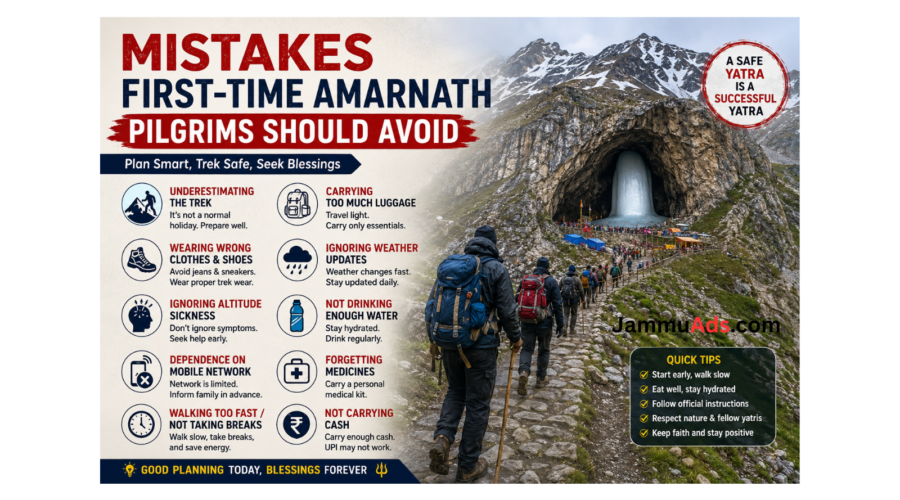
Mistakes First-Time Amarnath Pilgrims Should Avoid: A Complete Guide for a Safe, Comfortable & Successful Yatra
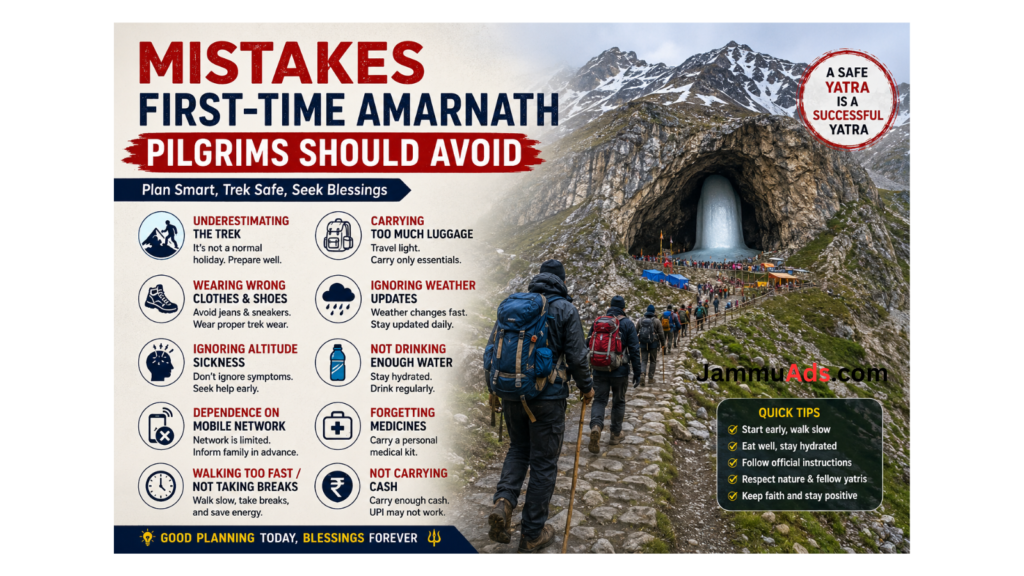
Quick Answer
If you’re visiting Amarnath for the first time, avoid common mistakes like underestimating the trek, skipping physical preparation, ignoring weather updates, carrying unnecessary luggage, wearing unsuitable clothes, neglecting altitude sickness symptoms, booking at the last minute, and failing to follow official instructions. Good planning makes the yatra safer, easier, and far more enjoyable.
Every Year, Thousands Make the Same Mistakes
The excitement of seeing Baba Barfani often makes people forget one important reality.
The Amarnath Yatra is not an ordinary holiday.
It is one of India’s most demanding pilgrimages.
Many first-time pilgrims imagine a peaceful mountain walk followed by darshan. Instead, they encounter steep climbs, freezing temperatures, unpredictable rain, long queues, reduced oxygen levels, and rapidly changing weather.
Some complete the journey comfortably.
Others struggle—not because the trek is impossible, but because of avoidable mistakes.
Almost every experienced pilgrim can recall seeing someone carrying an oversized suitcase, wearing jeans during rain, climbing too quickly, forgetting medicines, or refusing to rest despite obvious exhaustion.
These small errors often become the biggest challenges during the pilgrimage.
This guide explains those mistakes before you make them.
If you’re still planning your journey, our detailed Amarnath Yatra Guide explains registration, routes, permits, accommodation, and preparation from start to finish.
Quick Facts
| Information | Details |
|---|---|
| Difficulty Level | Moderate to Difficult |
| Suitable For | Physically fit pilgrims |
| Trek Distance | Depends on chosen route |
| Maximum Altitude | Around 3,888 meters |
| Oxygen Level | Lower than plains |
| Weather | Extremely unpredictable |
| Temperature | Can drop below freezing even in summer |
| Mobile Network | Limited availability |
| Medical Camps | Available along routes |
| Registration | Mandatory |
Why First-Time Pilgrims Face More Problems
Experienced yatris know that the mountain decides the pace—not the traveler.
Beginners usually make assumptions based on ordinary hill stations.
Amarnath is different.
One hour may be sunny.
The next may bring freezing rain.
A perfectly clear trail may suddenly become slippery.
Breathing may become harder with every kilometer.
Many problems happen not because people are weak, but because they simply didn’t know what to expect.
That is why experienced pilgrims often repeat one sentence:
“Respect the mountain.”
Mistake #1 — Thinking Amarnath Is Just Another Tourist Trek
One of the biggest misconceptions is treating the pilgrimage like a weekend hiking trip.
Many first-time visitors compare it with destinations such as Manali, Shimla, or Gulmarg.
The comparison is misleading.
Amarnath involves:
- High altitude
- Cold temperatures
- Long walking hours
- Less oxygen
- Difficult terrain
- Rapid weather changes
Unlike tourist destinations where hotels and restaurants are available every few kilometers, much of the pilgrimage depends on temporary camps.
Medical facilities exist, but prevention is always better than treatment.
Understanding this difference changes everything about how you prepare.
That is why experienced travelers spend weeks planning before they even begin registration.
You can understand the complete preparation process in our Amarnath Yatra Registration Guide.
Story: Rajesh’s First Mistake
Rajesh, a software engineer from Delhi, believed he was reasonably fit.
He played cricket occasionally and walked inside his office campus every evening.
He assumed that would be enough.
On the first steep climb after Chandanwari, he became breathless within minutes.
He had to stop repeatedly while older pilgrims slowly walked past him.
Later, he admitted that walking in a city and trekking above 12,000 feet were completely different experiences.
His mistake wasn’t poor fitness.
His mistake was assuming ordinary fitness automatically meant mountain fitness.
Mistake #2 — Ignoring Physical Preparation
Many pilgrims begin preparing only after reaching Jammu.
That is already too late.
Fitness should ideally begin four to six weeks before departure.
You don’t need to become an athlete.
You simply need enough stamina to walk for several hours while carrying light luggage at high altitude.
Simple exercises can make a huge difference.
Recommended Preparation
- Daily brisk walking
- Stair climbing
- Light jogging
- Controlled breathing exercises
- Squats
- Stretching
- Core strengthening
The goal isn’t speed.
The goal is endurance.
Many experienced pilgrims intentionally walk slowly during practice because that closely resembles actual trekking conditions.
Comparison: Prepared vs Unprepared Pilgrim
| Prepared Pilgrim | Unprepared Pilgrim |
|---|---|
| Walks comfortably | Gets tired quickly |
| Better breathing | Breathlessness |
| Enjoys scenery | Focuses only on reaching camp |
| Less muscle pain | Severe fatigue |
| Faster recovery | Needs frequent rest |
| Better confidence | Increased anxiety |
Travel Tip
Never test your fitness during the yatra.
Test it before the yatra.
Mistake #3 — Booking Everything at the Last Minute
Many first-time visitors believe they’ll easily find accommodation after arriving.
During peak pilgrimage days, that assumption often creates unnecessary stress.
Late bookings may result in:
- Higher hotel prices
- Limited room availability
- Poor transportation options
- Longer waiting times
- Less preferred helicopter slots
- Difficulty finding nearby accommodation
Planning early gives you more choices and better prices.
Our detailed Best Time to Visit Amarnath guide explains how crowd levels change throughout the season.
Mistake #4 — Carrying Too Much Luggage
Perhaps the most common beginner mistake.
People pack as though they’re relocating for a month.
Heavy backpacks become unbearable after only a few kilometers.
Every extra kilogram feels heavier at high altitude.
Experienced pilgrims follow one simple rule.
“If you haven’t used it during practice, you probably don’t need it.”
Items People Usually Carry Unnecessarily
- Multiple jackets
- Several pairs of jeans
- Heavy shoes for camp use
- Large toiletries
- Extra blankets
- Too many snacks
- Books
- Heavy cameras
What You Actually Need
| Essential | Optional |
|---|---|
| Warm jacket | DSLR camera |
| Raincoat | Extra shoes |
| Thermal wear | Large towel |
| Trekking shoes | Power bank |
| Medicines | Binoculars |
| Water bottle | Travel pillow |
| Torch | Small notebook |
Packing light reduces fatigue throughout the journey.
Story: The Backpack That Became the Biggest Problem
A family from Gujarat arrived carrying nearly 18 kilograms per person.
Initially, they felt prepared.
Within hours, they began hiring porters because carrying the weight became exhausting.
Ironically, most items inside their bags were never used.
A lighter backpack would have saved both money and energy.
Local Tip
Buy emergency items from Jammu or Pahalgam before the trek begins.
Prices generally increase at higher camps because transportation becomes more difficult.
Mistake #5 — Wearing the Wrong Clothes
Many first-time visitors think summer means warm weather.
That assumption doesn’t work in the Himalayas.
Even during July, temperatures can drop dramatically.
Rain can appear unexpectedly.
Cold winds become stronger after sunset.
Cotton clothing absorbs moisture and dries slowly.
Once wet, it makes your body colder.
Instead, wear layers.
Layering allows you to add or remove clothing depending on changing weather conditions.
Ideal Clothing System
Base Layer
- Moisture-wicking thermal
Middle Layer
- Fleece jacket
Outer Layer
- Waterproof windproof jacket
This combination keeps you warm without making you sweat excessively.
Common Clothing Mistakes
❌ Jeans
❌ Cotton hoodies
❌ Fashion sneakers
❌ Heavy wool sweaters only
❌ Thin socks
❌ No gloves
❌ No rain protection
Mistake #6 — Ignoring Weather Forecasts
Mountain weather changes faster than city weather.
A sunny morning doesn’t guarantee a clear afternoon.
Rain can make trails slippery.
Fog reduces visibility.
Cold winds increase the risk of hypothermia.
Checking weather updates should become part of your daily routine during the pilgrimage.
Instead of checking once before leaving home, monitor conditions every day.
Our Amarnath Weather Forecast page provides updated information before and during the yatra.
Travel Tip
Always keep your raincoat easily accessible.
Don’t bury it at the bottom of your backpack.
Many pilgrims lose valuable time unpacking their bags after the rain has already started.
Mistake #7 — Wearing Brand-New Trekking Shoes
Many people purchase expensive trekking shoes a day before departure.
Then they wear them for the first time during the pilgrimage.
New shoes often cause:
- Blisters
- Heel pain
- Toe injuries
- Swelling
- Foot fatigue
Always wear trekking shoes for at least two weeks before the yatra.
Walk several kilometers daily in them.
Your feet and the shoes should become familiar with each other before reaching the mountains.
Mistake #8 — Ignoring the Early Signs of Altitude Sickness
One of the most serious mistakes first-time pilgrims make is assuming every discomfort is “normal.”
Yes, you’ll feel tired after walking for hours.
Yes, your legs will ache.
But symptoms like severe headache, dizziness, nausea, unusual breathlessness while resting, confusion, or repeated vomiting should never be ignored.
These may indicate altitude sickness.
As you climb higher, the amount of oxygen in the air decreases. Your body needs time to adjust. Some people adapt quickly, while others experience symptoms even if they are young and physically fit.
That’s why altitude sickness doesn’t discriminate based on age or strength.
Common Symptoms to Watch For
| Mild Symptoms | Serious Symptoms |
|---|---|
| Headache | Difficulty breathing while resting |
| Mild dizziness | Severe chest tightness |
| Fatigue | Confusion or disorientation |
| Loss of appetite | Continuous vomiting |
| Difficulty sleeping | Blue lips or fingertips |
| Slight nausea | Inability to walk properly |
If symptoms become severe, seek medical help immediately instead of continuing the trek.
Medical camps are available along the pilgrimage route, and they’re there for exactly these situations.
Story: “Just One More Kilometer”
Vikram, a first-time pilgrim from Pune, developed a headache after crossing Sheshnag.
He ignored it.
His friends encouraged him to “push a little more.”
Within an hour, the headache became severe. He started vomiting and couldn’t walk without assistance.
Fortunately, nearby volunteers helped him reach a medical camp before the condition worsened.
Later, doctors told him that continuing the climb could have been dangerous.
The lesson?
Never compete with the mountain.
Listen to your body.
Travel Tip
If you’re feeling unusually breathless, stop, rest, and assess your condition.
Five minutes of rest is always better than risking your health.
Mistake #9 — Walking Too Fast
This mistake is surprisingly common.
Many beginners start the trek full of excitement.
They walk quickly during the first few kilometers, trying to reach the next camp as early as possible.
An hour later…
They’re exhausted.
Experienced pilgrims follow a completely different strategy.
They walk slowly.
Very slowly.
And they often reach before the people who rushed ahead because they need fewer long breaks.
Think of the trek as a marathon, not a sprint.
The Golden Trekking Rule
Walk slowly.
Walk steadily.
Walk continuously.
A slow pace conserves energy, reduces breathlessness, and lowers the risk of muscle cramps.
Comparison
| Fast Walker | Steady Walker |
|---|---|
| Gets tired early | Maintains energy |
| Sweats more | Better body temperature |
| More breathlessness | Comfortable breathing |
| Frequent long breaks | Short rest stops |
| Higher injury risk | Safer trekking |
Local Tip
Observe experienced local porters.
Despite carrying heavy loads, they rarely rush.
Their steady rhythm is one of the reasons they can complete the route daily.
Mistake #10 — Skipping Meals to Save Time
Some pilgrims avoid breakfast because they want to “start early.”
Others skip lunch to reach the next camp sooner.
Both are mistakes.
Your body burns significantly more energy during mountain trekking than during normal walking.
Without enough food, fatigue sets in quickly.
Best Foods During the Trek
✔ Bananas
✔ Dry fruits
✔ Dates
✔ Energy bars
✔ Khichdi
✔ Rice
✔ Chapati
✔ Soup
✔ Tea in moderation
Avoid overeating before climbing, but don’t trek on an empty stomach.
Story: The Cost of Skipping Breakfast
A young pilgrim decided not to eat breakfast because he wanted to avoid delays.
After two hours of climbing, he became weak and dizzy.
A volunteer offered him water and glucose.
Within minutes he felt better.
The problem wasn’t altitude.
It was low energy.
Mistake #11 — Not Drinking Enough Water
Cold weather tricks your brain.
You don’t feel thirsty as often.
That doesn’t mean your body doesn’t need water.
Dehydration increases fatigue and may worsen altitude-related symptoms.
Drink small amounts regularly throughout the trek.
Don’t wait until you feel thirsty.
Water Checklist
✔ Carry a reusable bottle.
✔ Refill only from safe drinking points.
✔ Drink regularly.
✔ Consider ORS if you’re sweating heavily.
Common Mistake
Some pilgrims drink excessive amounts of water at once instead of sipping regularly.
Steady hydration works much better.
Mistake #12 — Depending Completely on Mobile Networks
Many first-time visitors assume they’ll stay connected throughout the journey.
Reality is different.
Network coverage becomes unreliable in many sections of the route.
Calls may fail.
Internet may disappear for hours.
Sometimes even SMS messages don’t go through.
Plan Accordingly
Before leaving:
- Inform family about your itinerary.
- Share expected arrival times.
- Download offline maps.
- Save important phone numbers.
- Keep printed copies of bookings.
If your family knows there may be network interruptions, unnecessary panic can be avoided.
For route planning, read our Amarnath Route Guide, which explains the connectivity and facilities available along different stretches of the pilgrimage.
Mistake #13 — Forgetting Essential Medicines
Many people carry clothes, snacks, and chargers.
Then they forget the most important items.
Medicines.
Even healthy travelers should carry a small personal medical kit.
Essential Medical Kit
| Must Carry | Why |
|---|---|
| Regular prescription medicines | Never skip scheduled doses |
| Pain relief medicine | Minor aches |
| Band-aids | Blisters |
| Antiseptic cream | Minor cuts |
| ORS sachets | Hydration |
| Cotton & gauze | Basic wound care |
| Personal inhaler (if prescribed) | Emergency use |
| Hand sanitizer | Hygiene |
Don’t rely entirely on finding medicines during the trek.
Local Tip
Pack medicines in a waterproof pouch.
Rainwater has ruined many medicine strips during the yatra.
Mistake #14 — Choosing the Wrong Route Without Understanding the Difference
Many beginners simply book whichever route is available.
Instead, choose the route that matches your fitness level and travel goals.
Route Comparison
| Pahalgam Route | Baltal Route |
|---|---|
| Longer trek | Shorter trek |
| Gradual climb | Steeper climb |
| Better for first-timers | Better for experienced trekkers |
| More scenic | Faster completion |
| More overnight camps | Can be completed quicker by many pilgrims |
Neither route is universally “better.”
The best route depends on your physical condition, available time, and trekking experience.
If you’re still deciding, our Pahalgam vs Baltal Route Comparison explains both options in detail.
Mistake #15 — Ignoring Official Instructions
Every year, authorities issue safety advisories.
These include:
- Weather alerts
- Route closures
- Landslide warnings
- Medical advisories
- Crowd management instructions
Some pilgrims ignore these announcements because the weather “looks fine.”
That can be risky.
Conditions a few kilometers ahead may be completely different.
Always follow the instructions of security personnel, rescue teams, and local administration.
They monitor conditions continuously and make decisions based on real-time information.
Travel Tip
If authorities temporarily stop the movement of pilgrims due to weather or safety concerns, be patient.
A delay of a few hours is far better than entering an unsafe section of the route.
Mistake #16 — Carrying Too Many Electronics
It’s tempting to pack every gadget you own—DSLR camera, drone, tablet, multiple power banks, speakers, laptop, and several chargers.
In reality, most of these become extra weight.
Electricity is limited at higher camps, charging points can be crowded, and weather conditions aren’t always kind to electronic devices.
For most pilgrims, the essentials are:
- Mobile phone
- One reliable power bank
- Charging cable
- Torch or headlamp
Everything else is optional.
Protect Your Devices
- Keep electronics in waterproof zip-lock bags.
- Carry a small dry pouch inside your backpack.
- Avoid exposing phones to rain or snow.
- Keep batteries warm in cold weather, as low temperatures reduce battery performance.
Mistake #17 — Assuming Cashless Payments Work Everywhere
Digital payments have become common across India, but the Amarnath route is different.
Many camps and vendors depend on mobile networks. If connectivity drops, UPI transactions may fail.
Some small tea stalls, pony owners, and local vendors also prefer cash.
Carry Both
✔ Small denomination cash
✔ UPI as backup
✔ ATM withdrawals before starting the trek
Don’t carry excessive cash, but carry enough for emergencies.
Local Tip
Withdraw cash in Jammu, Srinagar, Pahalgam, or Baltal before beginning your trek. Finding a working ATM becomes much more difficult as you move closer to the shrine.
Mistake #18 — Underestimating Cold Nights
Many first-time pilgrims prepare only for daytime temperatures.
The surprise comes after sunset.
Even during the peak yatra season, nights can become extremely cold, especially if it rains or winds pick up.
A light sweatshirt that feels comfortable in Jammu may not be enough at higher camps.
Pack for the Cold
- Thermal innerwear
- Woolen cap
- Gloves
- Warm socks
- Windproof jacket
- Neck warmer
Layering is always better than carrying one very heavy jacket.
Story: “I Thought It Was July”
A family from Rajasthan packed clothes suitable for a pleasant summer vacation.
During their first night near Sheshnag, temperatures dropped sharply after rain.
They ended up buying extra woolens at much higher prices from temporary shops.
Planning ahead would have saved both money and discomfort.
Mistake #19 — Ignoring Weather Alerts
Weather in the Himalayas changes quickly.
Sometimes the sky looks perfectly clear where you’re standing, while heavy rain is falling just a few kilometers ahead.
Authorities may temporarily stop pilgrims from moving forward.
Some people become impatient and assume the restriction is unnecessary.
It isn’t.
These decisions are based on conditions further along the route.
Always trust official advisories.
Before leaving each morning, check the latest updates on our Amarnath Weather Forecast page and plan your day accordingly.
Mistake #20 — Forgetting That This Is a Pilgrimage
The Amarnath Yatra is famous because of its breathtaking scenery.
But the mountains are only part of the journey.
For millions of devotees, this is first and foremost a spiritual experience.
Respecting that atmosphere makes the journey better for everyone.
Simple ways to show respect include:
- Avoid playing loud music.
- Don’t shout unnecessarily.
- Follow queue instructions.
- Respect local customs and volunteers.
- Help fellow pilgrims whenever possible.
Many experienced yatris say the kindness shown by strangers becomes one of their strongest memories of the pilgrimage.
Mistake #21 — Leaving Waste Behind
The Himalayas are beautiful because they remain largely untouched.
Unfortunately, every year plastic bottles, snack wrappers, and disposable items are left along parts of the route.
Please don’t contribute to that problem.
Carry Your Waste Until You Find a Bin
Dispose of:
- Plastic wrappers
- Water bottles
- Used tissues
- Food containers
A clean pilgrimage route benefits everyone.
Local Tip
Carry one small garbage bag inside your backpack.
It weighs almost nothing but makes responsible waste disposal much easier.
Mistake #22 — Not Starting Early in the Morning
Most experienced pilgrims begin walking at daybreak.
Why?
Because mornings usually offer:
- Cooler temperatures
- Better visibility
- More stable weather
- Lower chances of afternoon rain
- More time to reach the next camp safely
Starting late often means walking during harsher weather or returning after dark.
Common Mistakes Senior Citizens Should Avoid
Many senior pilgrims successfully complete the Amarnath Yatra every year.
The key is careful planning.
Avoid These Mistakes
- Walking too quickly
- Skipping prescribed medicines
- Ignoring fatigue
- Carrying heavy backpacks
- Not informing companions about medical conditions
- Wearing unsuitable footwear
Senior citizens should never hesitate to take additional rest breaks.
The journey is about reaching safely—not reaching first.
Common Mistakes Families Make
Families traveling together often face different challenges.
Parents Should Avoid
- Overpacking children’s bags
- Forgetting rain protection
- Assuming children won’t feel altitude
- Losing sight of family members in crowds
- Not carrying snacks and water
Agree on a meeting point in advance in case someone gets separated.
Planning Checklist Before Leaving Home
Use this checklist a few days before departure.
Documents
✔ Yatra Registration
✔ Photo ID
✔ Medical Certificate (if applicable)
✔ Hotel bookings
✔ Transport tickets
✔ Emergency contacts
Clothing
✔ Thermal wear
✔ Waterproof jacket
✔ Trekking shoes
✔ Woolen socks
✔ Gloves
✔ Cap
✔ Raincoat
Health
✔ Personal medicines
✔ ORS
✔ Bandages
✔ Pain relief medicine
✔ Water bottle
Electronics
✔ Phone
✔ Charger
✔ Power bank
✔ Torch
Essentials
✔ Cash
✔ Dry fruits
✔ Identity proof
✔ Backpack rain cover
Final Safety Checklist Before Starting the Trek
Ask yourself these questions:
- Have I checked today’s weather?
- Am I feeling physically fit?
- Have I eaten breakfast?
- Do I have enough water?
- Is my raincoat easily accessible?
- Are my trekking shoes comfortable?
- Have I informed my family about today’s plan?
- Do I know today’s destination?
If every answer is “Yes,” you’re ready to begin.
Local Tips from Experienced Pilgrims
- Start walking early every morning.
- Walk slowly and consistently.
- Drink water regularly.
- Don’t ignore even mild symptoms of illness.
- Buy essentials before reaching higher camps.
- Respect weather-related restrictions.
- Keep your backpack as light as possible.
- Carry extra socks—they’re often more useful than an extra jacket.
- Stay positive and be patient during long queues.
Frequently Asked Questions (FAQs)
1. Is the Amarnath Yatra difficult for beginners?
It can be challenging, but with proper preparation, many first-time pilgrims complete it successfully.
2. Which route is better for first-time pilgrims?
Most beginners prefer the Pahalgam Route because the climb is more gradual.
3. How early should I prepare physically?
Ideally, begin four to six weeks before your journey.
4. Should I carry heavy woolen clothes?
No. Layering works better than carrying bulky clothing.
5. Can I complete the trek without trekking experience?
Yes, if you’re medically fit and prepare well.
6. Is mobile internet available throughout the trek?
No. Connectivity is limited in many sections.
7. How much luggage should I carry?
Only essentials. A lighter backpack makes the trek much easier.
8. Is drinking enough water important in cold weather?
Absolutely. Dehydration can occur even when you don’t feel thirsty.
9. Can weather change suddenly?
Yes. Mountain weather is highly unpredictable.
10. Are medical camps available?
Yes, medical assistance is available at several locations along the route.
11. Should I carry cash?
Yes. Small amounts of cash are useful when digital payments don’t work.
12. Are trekking shoes necessary?
Yes. Good trekking shoes provide grip, support, and comfort on uneven terrain.
13. What should I do if I feel dizzy?
Stop walking immediately, rest, and seek medical help if symptoms continue or worsen.
14. Can senior citizens undertake the yatra?
Yes, provided they meet the medical requirements and travel at a comfortable pace.
15. What is the biggest mistake first-time pilgrims make?
Underestimating the physical demands of the Amarnath Yatra and arriving without proper preparation.
Final Thoughts
Every experienced pilgrim was once a first-time visitor.
The difference between a stressful journey and a memorable one usually comes down to preparation—not luck.
Respect the mountains.
Respect your body’s limits.
Travel light.
Stay informed.
Follow official guidance.
Most importantly, remember that the Amarnath Yatra is not a race. Every step through the Himalayas is part of a deeply meaningful spiritual journey. With thoughtful planning and a calm mindset, your first visit can become an experience you’ll remember for the rest of your life.
As you continue planning, don’t forget to explore our Complete Amarnath Yatra Guide, Amarnath Weather Forecast, Amarnath Route Guide, Pahalgam vs Baltal Route Comparison, Amarnath Yatra Registration Guide, and Best Time to Visit Amarnath for detailed information that will help you travel with confidence.
